Here’s your insider guide on what to do in El Cabanyal, Valencia.
Tl;dr:
- Walk the tiled streets
- Browse the fresh market
- Paella at a place that has been cooking it since the 1920
- Step out onto the sand.
That is a great day, and most first-time visitors miss all of it.
- Overview
- What to Do in El Cabanyal
- Where Is El Cabanyal?
- A Quick History of El Cabanyal
- The Architecture
- Things to Do in El Cabanyal
- Where to Eat in El Cabanyal
- Where to Stay in El Cabanyal
- How to Get to El Cabanyal
- Is El Cabanyal Safe?
- El Cabanyal and Gentrification:
- Planning Your Trip to Valencia?
- Want no-stress travel planning?
- Need help planning your trip to Valencia?
Overview
I have lived in València since 2018, and my husband is Valencian, so I have watched this beach neighborhood go from a place people warned you about to one of the more talked-about barris in the city.
El Cabanyal is the old fishermen’s quarter, five kilometers from the historic center and about 20 minutes out on the tram. And if you want some rest and relaxation, then it’s one of the best places in the city to stay in.
So let’s get into it: the history, the architecture, the food, and everything worth doing in El Cabanyal.
What to Do in El Cabanyal
Short on time?
Here’s the quick version of what to prioritize in El Cabanyal, and I break each one down further below:
- Walk the tiled streets (Carrer de Progrés, Carrer de Sant Pere, Carrer de la Reina, Carrer d’Escalant)
- Find La Casa de les Gàrgoles, the neighborhood’s most photographed facade
- Browse the Mercat del Cabanyal for fresh fish and produce
- Grab an afternoon drink at Mercabanyal, the gastronomic market
- Eat paella at Casa Carmela, cooked over orange wood since 1922
- Step out onto La Malva-rosa beach, a five-minute walk away
Where Is El Cabanyal?
El Cabanyal sits in the Poblats Marítims district, about 5 km east of the historic center, right on the Mediterranean. It borders La Malva-rosa beach to the north and east.
The quickest way in from the city center is taking the “Marítim” metro line. Or you can grab several buses that drop you off even closer.
That location is the whole appeal. You get a real, lived-in beach neighborhood a short ride from the Ciutat Vella, without the resort feel you might expect.
If you’re still deciding which barri suits you, I’d read my full Valencia neighborhood guide alongside this one.
A Quick History of El Cabanyal
El Cabanyal was never really part of València, at least not historically.
It grew up as an independent fishing settlement called Poble Nou del Mar, and it developed its own distinct character over centuries.
It was only absorbed into the city in 1897, and even then it kept its own rhythm.
The architecture that defines it today grew out of the late 19th and early 20th century. Local builders blended traditional fishing-house structures with the decorative tile work of Valencian Modernisme.
The result is unusual: row after row of two-story houses, each one wrapped in different patterns, colors, and designs. No two facades are quite the same.
Here’s the part that matters, though. The neighborhood came very close to being demolished. In 1998, a plan to extend the Avinguda de Blasco Ibáñez straight to the sea would have cut El Cabanyal in half and destroyed hundreds of protected historic buildings.
The local resistance movement, Salvem el Cabanyal (“Save El Cabanyal,” in Valencian), fought the plan for nearly two decades. When the local government changed in 2015, the demolition was finally shelved, and you can read the background on the neighborhood’s long preservation fight.
That history matters if you want to understand why the neighborhood feels the way it does. It’s proud, community-minded, and still a little wary of what rapid change might bring next.
The Architecture
The tile work throughout El Cabanyal is one of the most distinctive sights in the whole city. It’s the ceramic decoration associated with Valencian Modernism, and it draws comparisons to the work of Antoni Gaudí. That’s not accidental, since local architects working in this style were paying close attention to what was happening in Barcelona at the same time.
The streets with the most concentrated and impressive facades are Carrer de Progrés, Carrer de Sant Pere, Carrer de la Reina, and Carrer d’Escalant. Walk all four slowly. Take your time at each facade, because the detail rewards it.
The single most photographed building is La Casa de les Gàrgoles on Carrer de Progrés. It’s a 1917 house with blue, white, and green tiles, classical columns, and floral border details. Granted, it is not signposted. You simply find it by walking, which is honestly part of the fun.
Beyond the tile facades, the neighborhood has a serious collection of street art woven between the older buildings. It reflects the creative energy that has moved into El Cabanyal over the last decade.
Things to Do in El Cabanyal
El Cabanyal is a walking neighborhood more than a checklist of attractions. That said, there’s plenty to fill a half-day or a full one. So depending on the time you have, here are some suggestions:
Walk the Architectural Streets
This is the one of my favorite things in any city. And it requires zero planning. Start at the Marítim-Serreria metro stop or the El Cabanyal tram stop, then walk south and east through the grid.
Give yourself about an hour.
In my experience, the best approach is to wander without a fixed route, because the neighborhood rewards detours. And there are lots of little bars, so you can always stop for a quick vermut.
Visit the Mercat del Cabanyal
El Cabanyal’s local market sits on Carrer de Cadis and runs Monday through Saturday. Fish and seafood dominate the stalls, since this is a port neighborhood, and the produce here is about as fresh as you’ll find anywhere in the city.
Beyond the fish, you’ll see olives, local cheeses, fruit, and vegetables. Stall holders will prep the fish for you if you ask.
The atmosphere is completely different from the Mercat Central downtown. This is a neighborhood market for neighborhood people.
If you do buy something, do actually buy something, because these are the vendors keeping the barri alive. Come with cash, come ready to point, and come with a bag. Just remember it’s closed on Sundays, like most markets in the city.
Grab a Drink at Mercabanyal
Mercabanyal is a gastronomic market set inside a converted early 20th-century cooper’s factory, right across from the El Cabanyal tram stop. The industrial bones of the building have been kept, with artwork and installations by local artists filling the space. Inside you’ll find food stalls, a wine shop, a beer bar with tanks on the wall, and a genuinely good atmosphere.
I think it’s a pretty fun place to see.
It’s less formal than a restaurant and more interesting than a beachfront terrace, which makes it a nice spot for a bit of tardeo, the Valencian afternoon-into-evening social ritual.
See the Rice Museum (Museu de l’Arròs)
This is a small, three-floor museum inside a former rice mill that operated until the 1970s.
For a city whose culinary identity is built on rice, the context matters. The museum covers everything from the harvesting of rice in the Albufera to the industrial processing that fed much of Spain. It opened in 2003 and is a nice go-to if you want to get out of the sun for a while.
Browse La Batisfera
La Batisfera is a bookshop and cafe on the corner of Carrer de la Reina, with a yellow-and-blue tiled facade that stops people in their tracks. Inside: floor-to-ceiling shelves of books.
The cafe is good, too. It’s really similar to the Ubik Café in Russafa.
So if you’re a book lover, it’s a great stop.
Check the Program at La Fàbrica de Gel
La Fàbrica de Gel is a cultural center and social space in a former ice factory on Carrer de Balansat. Events, exhibitions, markets, and community gatherings happen here regularly. If you’re staying in València for a few days, it’s worth checking their program, since it changes frequently and it’s a good window into the neighborhood’s creative side.
Step Out onto the Beach
You can’t write about El Cabanyal without the beach.
La Malva-rosa is a five-minute walk from the middle of the neighborhood, which makes this the rare barri where you can spend the morning among tiled houses and the afternoon on the sand.
I’m gonna go out on a limb and say that THIS is actually what most people are here for. The mediterranean beach!
The seafront is lined with restaurants, and yes, some of the city’s most storied paella spots are right here.
👉 Read: The Best Beaches in Valencia
Where to Eat in El Cabanyal
Here’s a few quick suggestions on classic spots to eat in El Cabanyal. But I also have full Valencian food guides if you want to check those out as well.
Casa Carmela
Casa Carmela is the most famous paella restaurant in El Cabanyal and one of the most respected in all of València. It cooks over orange wood, the traditional method, and has been doing so since 1922.
The result is a flavor you simply can’t get from a gas burner. Book ahead, and remember that paella is a lunch dish here, always.
If it’s your first visit, I’d order the Paella Valenciana, made with chicken and rabbit.
👉 Read: Where to Get the Best Paella in Valencia
Casa Montaña
Open since 1836 and still going strong. Casa Montaña is a wine cellar and tapas bar on Carrer de Josep Benlliure, famous for its traditional tiled interior, its anchovy-stuffed olives, and a remarkable wine list.
This is a super famous place and it’s fun to go to just for the decorations! Highly recommend it!
Anyora
Anyora is a modern vermouth bar with excellent creative tapas and a well-curated drinks selection.
It’s a bit more hip and modern. But if you’ve never had vermouth before (a classic drink here), then it’s a great spot to try out.
La Pascuala
For an esmorzar, València’s traditional mid-morning meal, La Pascuala is one of the most authentic options in the neighborhood.
And when I say the the sandwiches here are enormous…
I mean they’re ENORMOUSSSSS.
Come hungry on a Saturday morning, because you’ll need the appetite.
👉 Read: What Is an Esmorzaret? and, for the wider picture, The Best Restaurants in Valencia
Where to Stay in El Cabanyal
El Cabanyal is a good base if you plan to spend serious time at the beach, or if you want a more neighborhood feel than the historic center provides.
It’s about 20 to 25 minutes to the old town, so you’re never really too far off.
But I only recommend staying in El Cabanyal if you primarily want a beach holiday. If you’re looking to do more sightseeing, then this would NOT be my top pick.
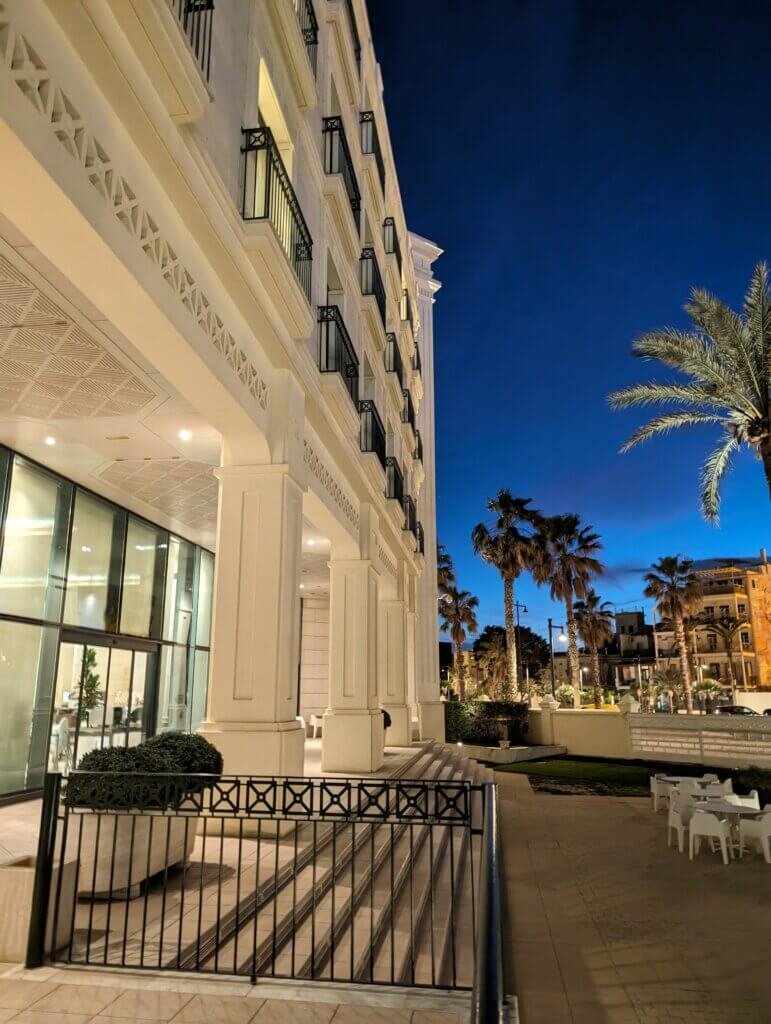
So if you are, te two most established options in the area are Hotel Miramar a solid, well-priced choice directly in the neighborhood, and Las Arenas, a luxury beachfront hotel on the Malva-rosa seafront that sits in a different category entirely.
That said, prices here can be a little steep from time to time, especially in peak summer, so book early once you have your dates.
👉 For a full breakdown of beach-area accommodation: Best Hotels in El Cabanyal. And if you want to compare neighborhoods first, start with Where to Stay in Valencia.
How to Get to El Cabanyal
Metro: Line 7 stops at Marítim-Serreria, which puts you at the southern edge of El Cabanyal. If you’re coming straight from the airport, the Valencia Tourist Card covers the airport metro and all city transport, which makes it an easy first purchase.
You can pick one up through GetYourGuide before you arrive.
Bus: Lines 19 and 32 will take you to the beach directly from the city center.
Bike: From the historic center, the beach path takes around 20 to 25 minutes and is largely flat.
👉 Read: How to Rent a Bike in Valencia
For everything else on getting around, here’s my full Valencia public transport guide, and if you want the tram specifics, my Valencia metro guide covers it.
Is El Cabanyal Safe?
Yes, by any realistic measure. El Cabanyal has had a complicated reputation in the past.
This is from decades of urban neglect that followed the demolition plan left parts of the neighborhood in poor condition, which attracted associated problems. That period is mooooostly over now.
The neighborhood today is in active revival. So as long as you take normal precautions you’d take anywhere else, you’ll be fine.
Beyond that, there’s nothing here that should deter anyone from visiting.
👉 Read: Is Valencia Safe?
El Cabanyal and Gentrification:
The same energy that saved El Cabanyal from demolition now drives its popularity.
And popularity comes with its own issues.
Rents have risen sharply in recent years.
Some of the older residents, including the fishing families whose identity defines the neighborhood, are being priced out of the place they fought to protect.
This is not unique to El Cabanyal. It’s the same story playing out in interesting urban neighborhoods across Europe.
So if you do come, please be mindful that Airbnbs play a huge role in the housing crisis here. So instead:
- Spend your money at local businesses
- Stay at hotels, not Airbnbs
- Be mindful of your impact
- Be respectful and courteous towards the locals
Planning Your Trip to Valencia?
If you want personalized, on-the-ground advice for your specific trip, I offer travel consultations and custom itineraries for Valencia.
I’m a certified travel planner, so no matter what your budget is, I’ll be able to help make your trip a little bit easier.
Bon viatge,
Kevin
Need help planning your trip to Valencia?
Here are the tools I use for the cheapest (and most reliable) vacation planning:
- 🏠Booking – Affordable hotels and apartments
- 🏠Hostel World – Safe and budget-friendly hostels
- ✈ Kiwi – My favorite tool for cheap flights
- 🚗Discover Cars – Best place for car rentals
- 📶Airalo – eSim cards for easy internet access while traveling
- 🦺Safety Wing – The #1 travel medical insurance
- 💸Airhelp – Cancelled flight compensation (it’s free!)
- 🗂️ Your Spanish Visa – Move to Spain the easy way
- 🍊 My Tourist Card Calculator – Find out if the VLC travel card is worth it for you
Affiliate disclosure: This post may contain affiliate links. These are links to services I personally recommend using for your trip to Valencia. At no extra cost to you, I may earn a small commission from these brands if you choose to make a purchase. Your support helps me pay my bills and eat more bunyols!