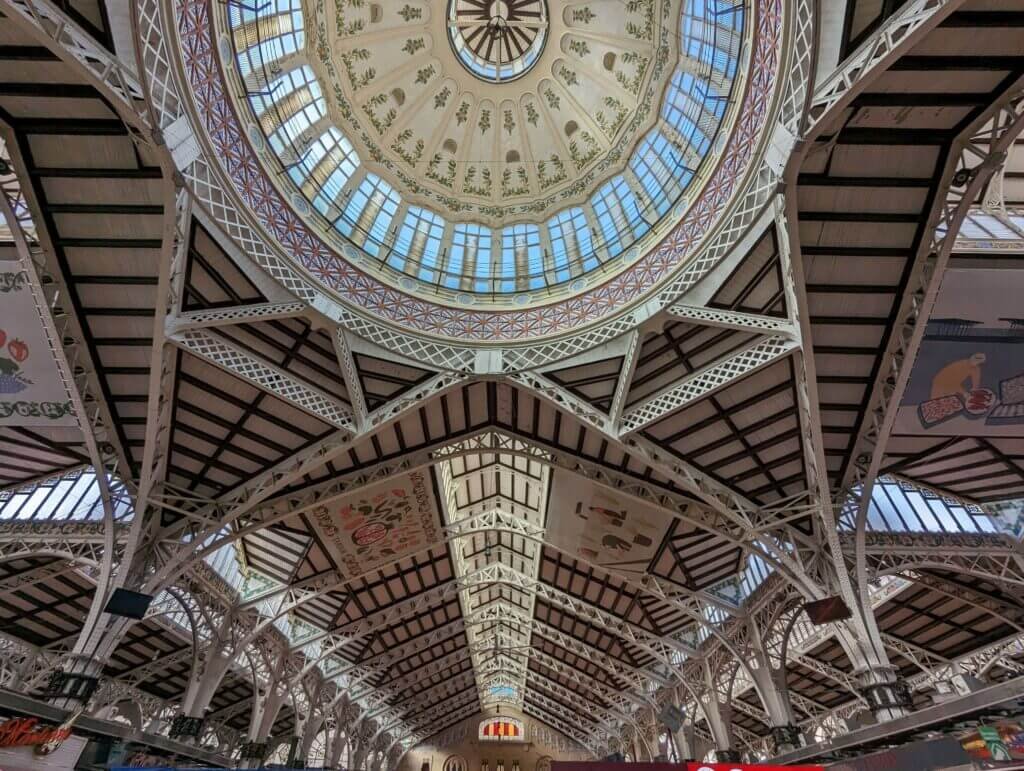
Choosing where to live in Valencia is such an important decision! I moved to Valencia in 2018, and I’ve spent the years since watching friends, readers, and my own husband’s family argue happily about which neighborhood is actually the best one to live in.
The truth is… well, the best one depends on what you want.
So this isn’t a “where to stay for the weekend” guide. If you’re visiting, I have a separate neighborhood guide for travelers that covers exactly that.
This one is about living here: the rent reality, the noise, the commute, the community, and the trade-offs nobody mentions until you’ve already signed a year-long lease.
tldr: The best areas to live in Valencia are:
- Russafa for young, social energy
- El Cabanyal for beach life
- Ciutat Vella for historic buzz
- L’Eixample for central and calmer
- El Pla del Real for quiet and green
- Benimaclet for a more local-village feel
- How do you choose the right neighborhood to live in Valencia?
- Relocation Guide
- Russafa
- El Cabanyal
- Ciutat Vella
- L'Eixample
- El Pla del Real:
- Benimaclet
- What about the suburbs and outer towns?
- Which Valencia neighborhood is right for you?
- What does it really cost to rent in these neighborhoods?
- tl;dr
- Frequently asked questions about living in Valencia
- More València Resources
- Need help planning your trip to Valencia?
- Want no-stress travel planning?
- About the Author
How do you choose the right neighborhood to live in Valencia?
Choosing where to live in Valencia comes down to five quick questions:
- Your monthly rent budget
- How much street noise you can live with
- What your daily commute should be
- Whether you want the beach or the center
- Whether you’d rather be surrounded by other expats or by Valencian neighbors
Once you have those clear, and the neighborhood almost picks itself.
Because the mistake I see most often is people choosing the neighborhood that looked prettiest on their holiday. And then you end up in an old building in Russafa and can’t sleep during the weekends…
So before you fall for a façade, think about your actual daily life. Where will you work, and how will you get there? Do you need quiet to function, or does a lively street feel like home?
All of those are super important to actually enjoying your life where you live.
Valencia is compact and quite walkable, so almost anywhere central is livable.
If you want a shortcut, I built a quick Valencia Neighborhood Quiz that matches you to an area based on how you actually want to live. You can take it right here in a couple of minutes.
So, before I jump into a couple of my favorites, there are some things you should know. Rents have climbed a lot since I arrived, and València isn’t exactly a bargain…
It’s still more affordable than Madrid or Barcelona, but “affordable Spain” is pretty subjective at this point. Because for most Spanish people… it’s not affordable. I’ll give you real numbers instead.
For the full picture, my Valencia cost of living guide breaks it all down.
Relocation Guide
PS – want a free relocation checklist before making your move? Don’t miss out on any paperwork before you make your move!
Check out the relocation checklist.
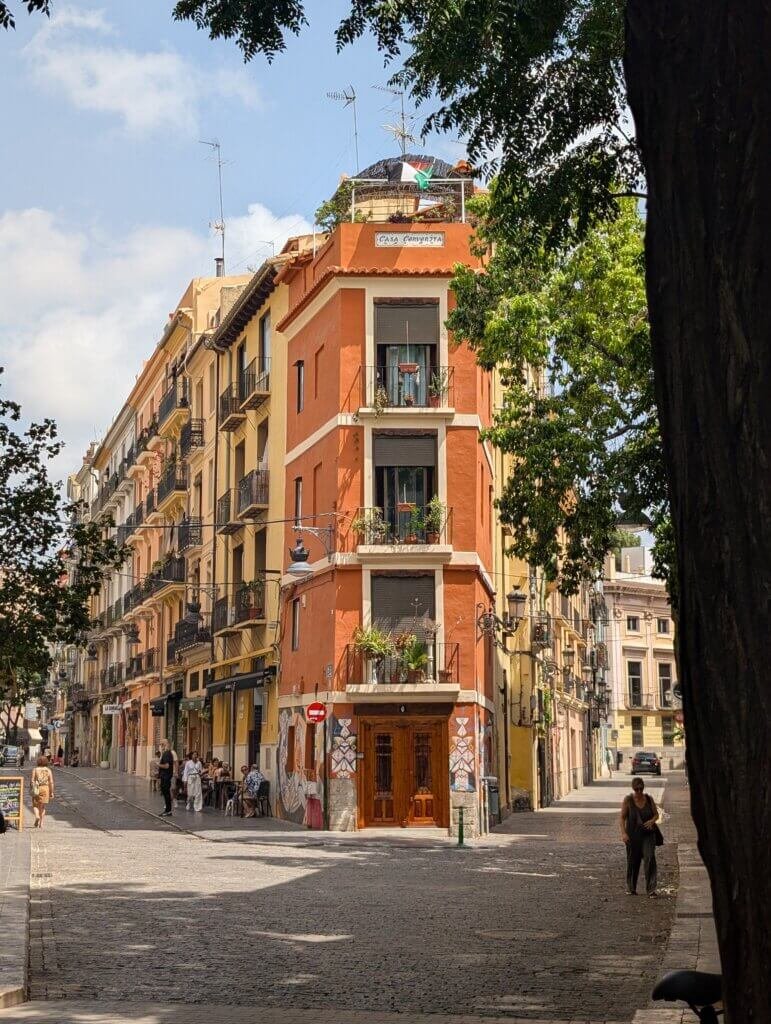
Russafa
| Pros | Cons | Avg. Rent |
| High energy Lots of restaurants Gorgeous area | Expensive Loud Gentrified | €1,725/mo |
Russafa is a great place to live if you’re young at heart, social, and want the city’s best food and nightlife on your doorstep.
But on the flip side, it’s also one of the most expensive areas. And one of the loudest.
Russafa is the neighborhood everyone falls in love with first, and I understand why. It’s a former village inside L’Eixample that turned into the city’s hub for restaurants, bars, etc. So if you’re really looking for some lively vibes, it’s a great spot.
Buuuut Russafa’s popularity is also its catch. Rent has risen fast, and locals increasingly talk about gentrification pushing longtime residents out. Which is a very real tension that you should consider.
As of September 2026, Idealista listings put the median Russafa rental around €1,725 a month, roughly €21 per square meter, which makes it one of the most expensive areas in the city.
The other catch is noise. If you’re a light sleeper, avoid the blocks right around the bar-heavy streets like Carrer de Cadis and Carrer de Sueca, and you’ll have a much better time.
Getting around is easy on foot, though the metro is a weak spot. Russafa sits on a single line, so many residents just walk or bike everywhere. That can be really nice…but also it’s not as convenient when you have to get somewhere specific.
If you want the full rundown of the area, restaurants and all, my complete Russafa guide goes deeper.
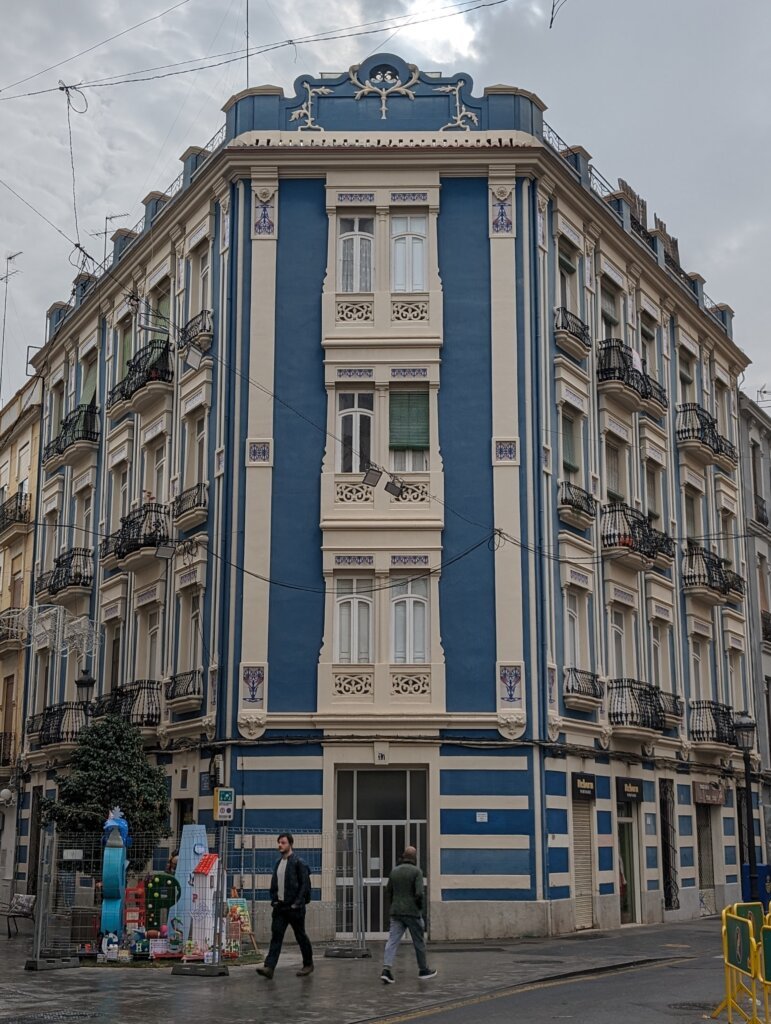
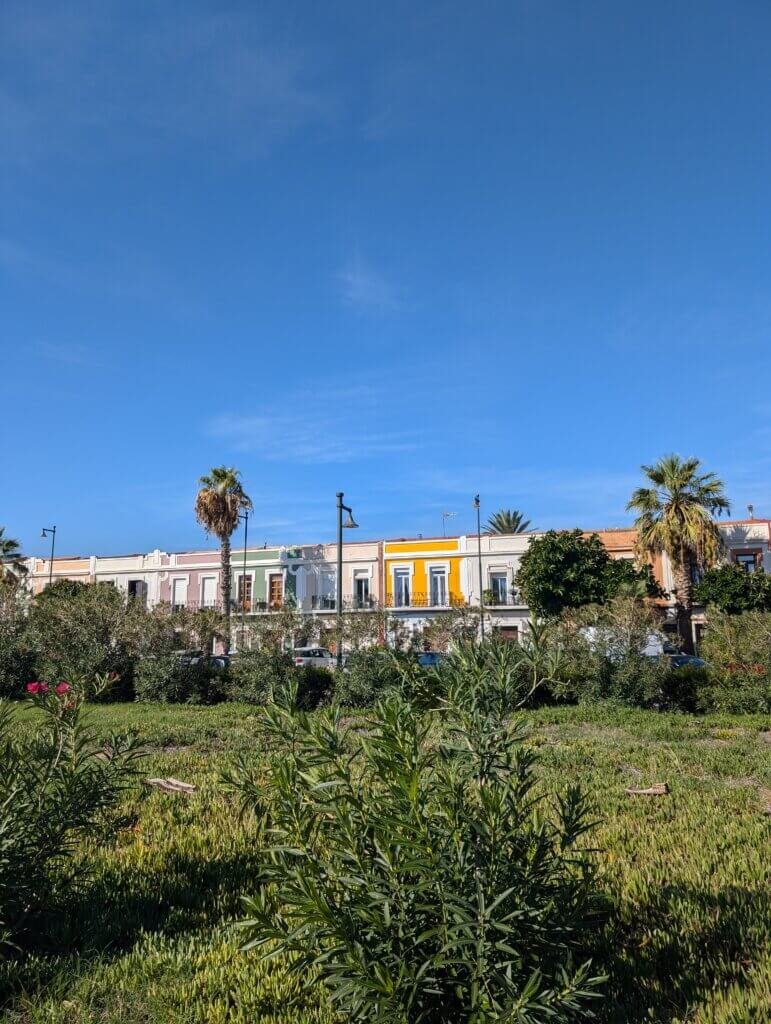
El Cabanyal
| Pros | Cons | Avg. Rent |
| Beach Quaint area | Expensive Far away | €1,500/mo |
El Cabanyal is the best choice if living near the beach is a non-negotiable for you.
It’s an old fishermen’s quarter, with its tiled houses, has become a favorite for remote workers and creatives who prefer sand over city noise.
The main trade-off is the commute: you’re around 20 to 30 minutes from the center, and the neighborhood is still mid-transformation, block by block.
Personally, this is a hard pass for me. As much as I love the beach, I value being near the city center more. But hey – it just depends on your priorities!
Although El Cabanyal does have a cool transformation story! For years it was neglected and even slated for a road that would have cut it in half, and now it’s one of the most characterful places to live in Valencia.
Waking up a five-minute walk from the Mediterranean does something to your quality of life. Getting that lovely sea breeze everyday really is a big perk.
That said, El Cabanyal is a genuine work in progress. One street will be beautifully restored and the next will still be waiting its turn (this is a euphemism lol). So make sure you actually check the street before signing any papers!
Rent here is a touch below the center. As of September 2026, Idealista puts the median around €1,500 a month, near €18.5 per square meter. Which is a bit expensive for Valencians.
Still, for beach lovers it can be a great option. My guides to El Cabanyal and the best beaches in Valencia will show you what you’d be waking up to.
Ciutat Vella
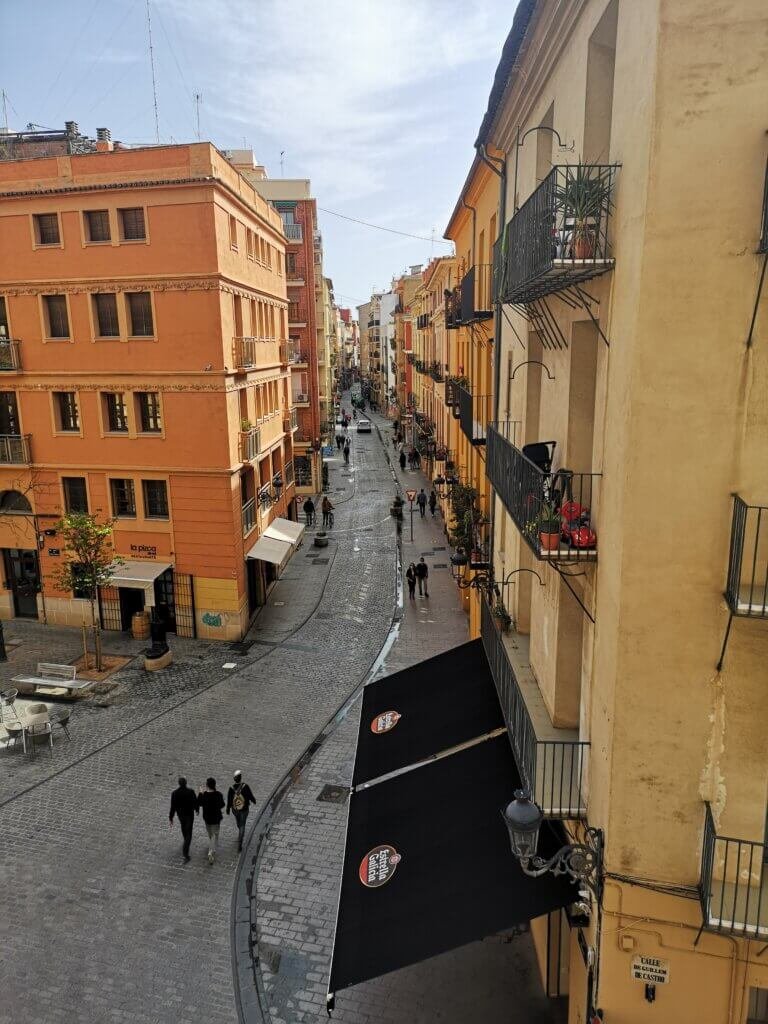
| Pros | Cons | Avg. Rent |
| Beautiful historic center Close to everything | Busy Less convenient for groceries Expensive Old buildings | €1,500/mo |
This is probably where I would loooooove to live if it weren’t for my current neighborhood. Ciutat Vella, and especially El Carme, is ideal for people who want to live inside a postcard. You’re in the middle of medieval streets, plazas, and the city’s landmarks. So this suits culture lovers and social butterflies.
The catches are tourist foot traffic, festival noise, older buildings with quirks, and very high rents.
Living in Ciutat Vella means living in the oldest part of Valencia. Which for some can be amazing! I still go on walks through here at least once a week.
It’s wonderful for a certain kind of person. If you want to step out your door into the heart of everything, from the Mercat Central to the Torres dels Serrans, you’ll be very happy here.
The trade-offs are the flip side of that charm, though. You’re sharing your streets with tourists year-round, and during Les Falles in March the whole area becomes an absolute chaos. Then, you don’t typically have a grocery store nearby.
The buildings are historic too, which is lovely until you’re in a fourth-floor flat with no elevator and plumbing from another era.
Ciutat Vella is also the one of the priciest districts in the city. Idealista figures in mid-2026 put it near €19.7 per square meter, with El Carme rentals commonly around €1,500 a month or more.
If the history is what’s pulling you to Valencia, no other neighborhood delivers it like this one. My full Ciutat Vella guide walks you through it street by street.
L’Eixample
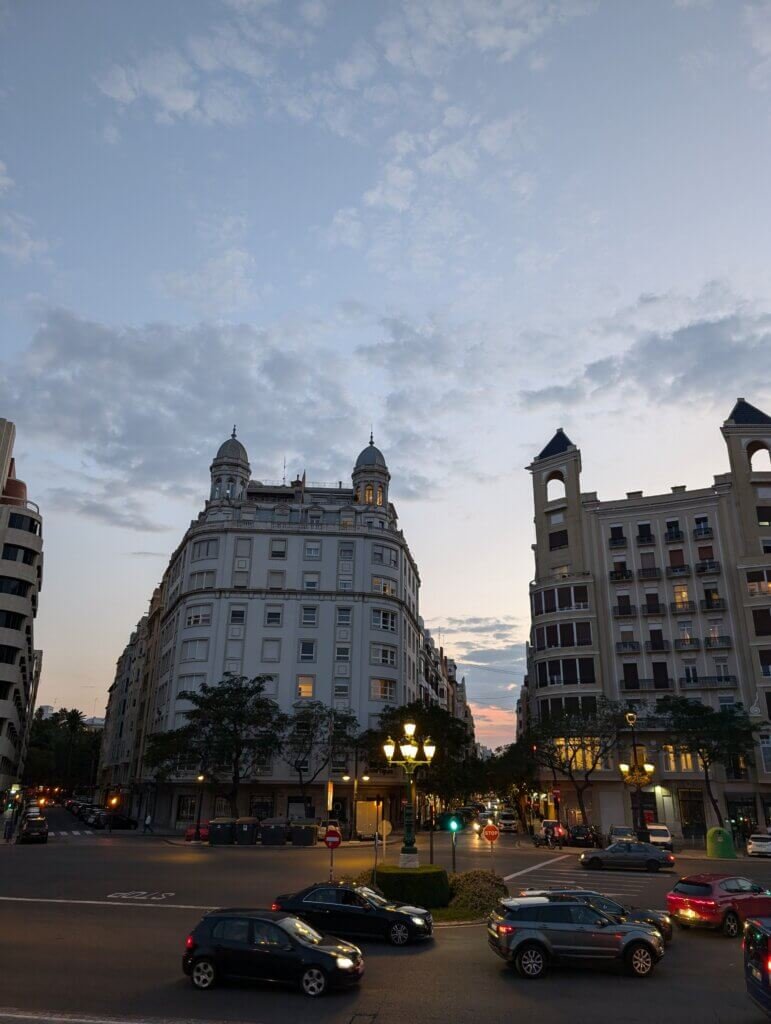
| Pros | Cons | Avg. Rent |
| Close to everything More relaxed Convenient | More expensive | €1,400/mo |
L’Eixample is the sweet spot for professionals, couples, and families who want to be central without the party. You’ll get elegant modernista buildings, wide tree-lined avenues, and the smart neighborhoods of Gran Via and El Pla del Remei.
And you get calm and convenience together. That’s something a lot of families really love.
L’Eixample is where a lot of people end up once they’ve lived in Valencia for a while and know what they want. It’s central, polished, and calmer than Russafa, which technically sits inside it.
The Gran Via and El Pla del Remei areas in particular are lovely, full of stately early-1900s buildings while being a bit more calm than the center.
For couples and young families, it’s a strong pick. You’re a short walk from the Jardins del Túria, the shopping, and just about everything, with far less late-night noise than the party pockets.
The obvious catch is price. As a central, in-demand district, L’Eixample runs around €18.5 per square meter as of mid-2026, so expect to pay a premium for that calm and location.
El Pla del Real:

| Pros | Cons | Avg. Rent |
| Family-forward Well-connected Near the river | Prices vary Not for everyone | €2,000/mo |
El Pla del Real is another great place to live in València. It can be an upscale choice for people who want calm streets and green space without leaving the city. But it can also be great for students since it’s right next to the university.
Plus you’re near the Jardins del Túria and the Viveros gardens, which makes it a favorite for families, professionals, and retirees.
But on the downside, this means you can find apartments that are CRAZY expensive… but also some really affordable ones for younger folks.
El Pla del Real is the neighborhood I point friends toward when they say they want peace and quiet but can’t stomach moving to the suburbs. It’s where my husband’s family lives!
It’s central, but it feels quite residential.
I’d say that its biggest asset is location. You’re right next to the Jardins del Túria and the Viveros gardens, so morning runs and lazy weekend picnics are built into daily life.
It’s also near some of the university campuses and cultural spots, which gives it a settled, grown-up feel. If you’re moving with kids or you just value your sleep, this is a wonderful fit.
So depending on what you want, it can be a really good option. You just have to pay attention to the specific street, as some of them are more university-focused, while others are more residential.
Benimaclet
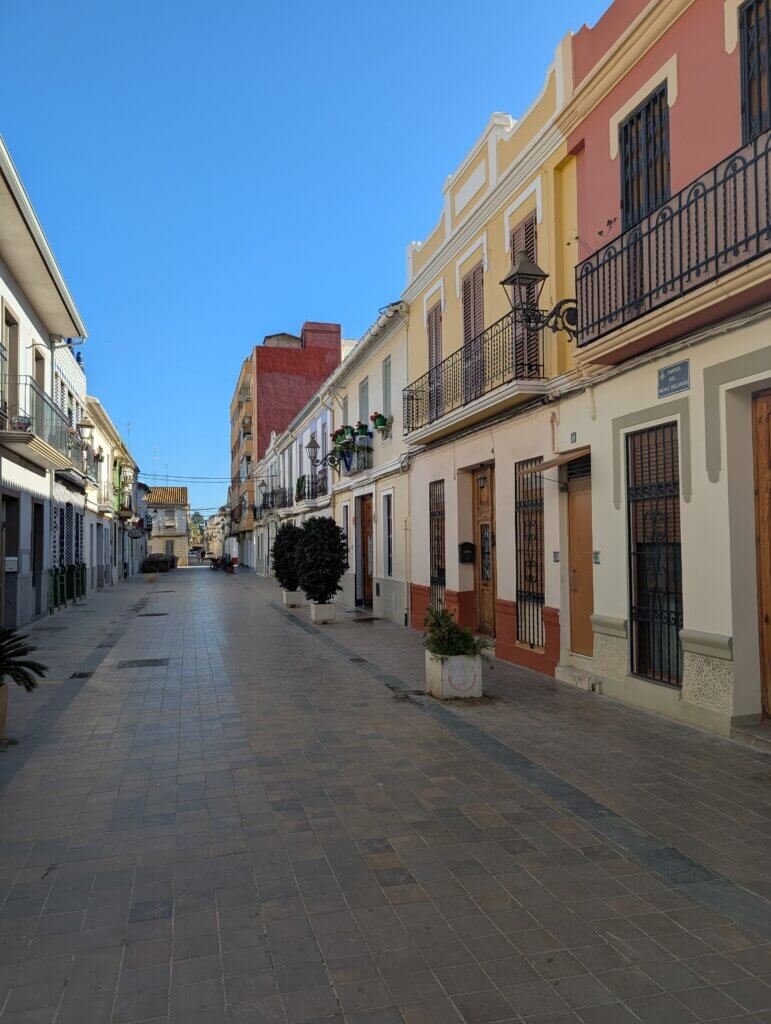
| Pros | Cons | Avg. Rent |
| Local feel Mixed crowd Old village | Far away Older buildings | €1,350/mo |
Benimaclet is basically where all of my friends live lol.
This is a small, tight-knit, and artsy community. Here you’ll find lots of students, alternative crowds, and plenty of bars.
is the top pick for movers who want a real local community without a center-of-town price tag. It’s an old village that’s been absorbed by the city. So now there’s a mix of lifelong Valencian families, students, and an easygoing alternative crowd.
You can expect a strong Valencian-speaking community, in exchange for older buildings and a slightly further-out location.
I would say it feels veryyyyyyyy different from the rest of the city. There are fewer tourists and more locals. Usually when people move to the capital from a smaller town, they end up moving here.
If you want to integrate rather than live in an expat bubble, Benimaclet makes it easy. It’s honestly a great place to practice the language, and my guide on how to learn Valencian pairs well with living here.
On price, it’s the most affordable of the bunch. As of September 2026, Idealista puts the median around €1,350 a month, near €15 per square meter.
The negatives are that it’s a bit further away, and sometimes the older buildings come with their own issues.
What about the suburbs and outer towns?
Valencia’s suburbs and outer towns, like Alboraia, l’Eliana, and Rocafort, work best for families who want space, gardens, or international schools.
The suburbs tend to be more expensive if you want an actual house, not an apartment. But many of these areas are still easily connected to the city by the metro.
I also have a lot of friends who moved out to places like Paterna since it’s much more affordable. Not everyone moving to Valencia actually wants to live in the thick of it, and that’s fair. If you’re coming with kids and a remote job, the towns just outside the city can make a lot of sense.
Alboraia sits right on the northern edge, famous for orxata and with the Patacona beach attached, so you get a smaller-town feel while staying close to the city. It’s a popular middle ground.
Further out, places like L’Eliana and Rocafort are leafy, family-friendly, and home to several international schools, which is why a lot of relocating families gravitate there. You’ll find gardens, pools, and quiet.
The catch I always flag is the car. València is a city where you can happily live without one, but out in the towns that changes fast. My husband has family that lives out in l’Eliana, and they rely on their car heavily.
You’ll also be trading spontaneous city life for a commute, so you just need to keep that in mind.
Which Valencia neighborhood is right for you?
Figuring out where to live in Valencia is basically a matter of balancing a few factors. Your budget, your priorities, and what you can deal with.
The fastest way to narrow it down is to match the neighborhood to how you actually want to spend your days. Here’s the short version of who each area tends to suit, based on the movers I’ve watched settle in over the years.
- Young professionals: Russafa for café energy, or El Cabanyal if you want the beach
- Families: L’Eixample or El Pla del Real for space and calm in the city, or the outer towns if you want a garden and international schools.
- Retirees: El Pla del Real for green and quiet, or a calmer pocket of L’Eixample.
- Beach lovers: El Cabanyal, hands down.
- Nightlife and social life: Russafa, with Ciutat Vella close behind.
- Best value and local feel: Benimaclet.
- First-timers that want to integrate: Benimaclet, or a nearby town
If you’re still unsure, try taking my Valencia Neighborhood Quiz. It’ll point you to a starting area in about two minutes.
What does it really cost to rent in these neighborhoods?
As of September 2026, expect a citywide median of roughly €1,150 a month for a one-bedroom and €1,500 for a two-bedroom, or about €16.5 per square meter, according to Idealista and related data.
Although this changes quite frequently. I’ll try to update it as much as possible.
Central and beachside areas run higher, while Benimaclet and the outer neighborhoods sit lower. Rents have risen a LOT lately. And there have been some really serious gentrification issues, too. So definitely keep in mind that there is a housing crisis going on.
But here’s the average rents I’ve found to give you a quick idea:
- Russafa: around €1,725 a month, roughly €21 per square meter. The priciest of the bunch.
- Ciutat Vella and El Carme: commonly €1,500 or more, near €20 per square meter.
- El Cabanyal: around €1,500 a month, near €18.5 per square meter.
- L’Eixample: a central premium, also around €18.5 per square meter.
- El Pla del Real: around €1,450 a month, a little under €18 per square meter
- Benimaclet: the most reasonable, around €1,350 a month, near €15 per square meter.
Now remember, these are medians across all apartment sizes, and the typical Valencia flat is around 80 square meters, so a small one-bedroom will be a bit smaller.
I won’t call any of it cheap, because rising rents are a real and sometimes painful story here.
For some more details on that, including utilities and groceries, see my cost of living in Valencia guide and my guide to grocery shopping.
It’s also important to note that gentrification and a housing crisis are very real right now. At the moment, the median salary is €1,500 a month after taxes as of 2024. So a lot of people are truly struggling to find housing. Keep that in mind before you start thinking about “how cheap” it is here.
tl;dr
- There’s no single best neighborhood, only the best one for your budget, noise tolerance, and preferences.
- Russafa for social energy, El Cabanyal for the beach, Ciutat Vella for history, L’Eixample for central calm, El Pla del Real for green quiet, and Benimaclet for local, affordable living.
- Rents have climbed sharply, so don’t expect 2018 prices.
- The suburbs suit families who want space, and some towns are connected by metro
- Be open to trying to new areas
Frequently asked questions about living in Valencia
There’s no single best area, since it depends on your priorities. Russafa suits social young professionals, El Cabanyal suits beach lovers, L’Eixample and El Pla del Real suit families wanting calm, and Benimaclet suits movers who want local character on a smaller budget.
Russafa, Ciutat Vella, and El Cabanyal have all been strongly gentrified. This is from a combination of expats and real estate investors buying homes here. This means you’ll find more international folks here than actual Valencians who have been priced out.
For families who want to stay in the city, L’Eixample and El Pla del Real offer calm streets, green space, and central convenience. Families wanting a garden and international schools often choose outer towns like L’Eliana or Rocafort, accepting that they’ll need a car.
It depends on your routine. El Cabanyal gives you the beach but a 20-to-30-minute commute to the center. Central neighborhoods keep everything walkable but you don’t get a sea view. Personally, I prefer the city center.
As of September 2026, the citywide median is roughly €1,150 a month for a one-bedroom and €1,500 for a two-bedroom, though central and beachside areas run higher. Rents have risen sharply in recent years, so always check current Idealista listings for your target neighborhood.
More València Resources
Figuring out where to live in València is a big decision! Luckily, I landed in a neighborhood I’m very happy with (Extramurs), but it’s not for everyone. That’s why I say that it’s important to understand your priorities and be realistic about the type of lifestyle you’re looking for.
If you’re serious about the move, grab my free Spain Relocation Checklist. It walks you through the whole process step by step, and it’s the easiest way to make sure you don’t miss anything important along the way.
And if you’re still deciding between neighborhoods, take the Valencia Neighborhood Quiz above to get a personalized starting point.
And of course, feel free to say hello, because I answer every message, and that’s what I’m here for.
Fins ara, i bon viatge! — Kevin
Need help planning your trip to Valencia?
Here are the tools I use for the cheapest (and most reliable) vacation planning:
- 🏠Booking – Affordable hotels and apartments
- 🏠Hostel World – Safe and budget-friendly hostels
- ✈ Kiwi – My favorite tool for cheap flights
- 🚗Discover Cars – Best place for car rentals
- 📶Airalo – eSim cards for easy internet access while traveling
- 🦺Safety Wing – The #1 travel medical insurance
- 💸Airhelp – Cancelled flight compensation (it’s free!)
- 🗂️ Your Spanish Visa – Move to Spain the easy way
- 🍊 My Tourist Card Calculator – Find out if the VLC travel card is worth it for you
Affiliate disclosure: This post may contain affiliate links. These are links to services I personally recommend using for your trip to Valencia. At no extra cost to you, I may earn a small commission from these brands if you choose to make a purchase. Your support helps me pay my bills and eat more bunyols!

About the Author
Hi, I’m Kevin Joseph. I’m a Valencia Travel Advisor that serves as your cultural bridge to the city. I’ve lived here since 2018 with my Valencian husband. My goal is to help you get a better experience, while respecting the culture and making travel more sustainable for everyone.