
Let’s talk about getting your NIE in Spain. Because if you’re moving to Spain, or even just getting a package from Amazon, you’ll need a NIE. So let’s start with the obvious question: what is a NIE in Spain, and how do you actually get one?
I’ve been a resident in Valencia since 2018, and I’ve been through the Spanish immigration system several times now. Student visa, then the EU family member route after I married my Valencian husband, and now I’m working through citizenship.
The NIE is the very first step, so I want to walk you through what it is, how to get one, and the very specific way it works here in Valencia.

- What Is a NIE in Spain?
- Do You Need a NIE, and Who Has to Get One?
- How to Get a NIE in Spain
- How to Get Your NIE in Valencia
- Should You Hire a Gestoría or Do It Yourself?
- Tips from someone that’s been there, done that
- NIE in Spain: Frequently Asked Questions
- tl;dr
- Bona sort!
- Need help planning your trip to Valencia?
- Want no-stress travel planning?
What Is a NIE in Spain?
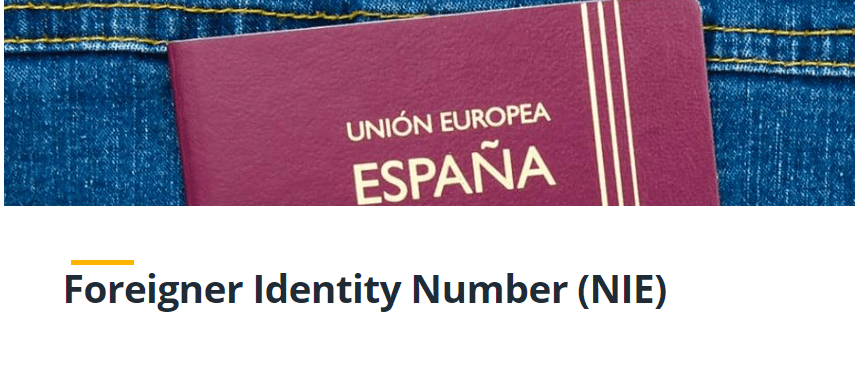
A NIE (Número de Identidad de Extranjero) is your foreigner identification number in Spain.
It’s a unique tax and identification number that every non-citizen needs for almost any legal, financial, or administrative task here. From signing a lease to getting paid to even just getting your discount card at the grocery store.
The NIE isn’t a visa or a residency permit on its own, though. It’s just the number that identifies you to the Spanish system.
Think of it as your Spanish tax ID as a foreigner. Citizens have a DNI number, and the NIE is the equivalent slot for the rest of us.
The number itself usually looks like a letter, seven digits, and another letter, something like X-1234567-A. Once it’s assigned to you, it’s yours forever!
What Is a NIE Used For?
Uhm, so like literally everything. You’ll need your NIE to open a Spanish bank account, sign a rental contract, sign a work contract or get paid, buy or sell property, buy a car, set up utilities, and file taxes.
I mean, you literally need a NIE to be able to order something from Amazon.
Even some things you’d think are minor, like getting a long-term phone contract, will ask for it. So if it involves money or paperwork in Spain and you’re a foreigner, assume you’ll need your NIE for it.
NIE vs. TIE vs. Empadronament: What’s the Difference?
The NIE is your identification number, the TIE is the physical residency card that shows that number for non-EU residents, and the empadronament (padrón) is your registration at your local town hall confirming where you live. They’re three different things that people constantly mix up. You can have a NIE without being a permanent resident, but if you’re living here long-term as a non-EU citizen, you’ll usually end up with all three.
In other words:
- TIE is your ID card.
- NIE is the number on your ID card.
- The Padró (or Padrón) is your address registration
The NIE is the number. The TIE (Tarjeta de Identidad de Extranjero) is the card that non-EU residents carry, and it has your NIE printed on it. The empadronament is a separate registration with your city which is used for census data and some paperwork.
If you want the full breakdown on moving here, here are few resources I made that might help:
Quick Language Note
So I live in València, which has its own official language (Valencian). That’s a whole different language from Spanish. In fact, Spain has five official languages!
That means, depending on where you live, you’ll find information in multiple languages. For example, l’empadronament is in Valencian. The equivalent in Spanish would be “empadronamiento”. But if you go to somewhere like the Basque Country, you’ll find it in another language.
And because I live in València, I often use the Valencian version whenever possible. So make sure you keep that in mind when you’re looking up information! I know it can be confusing for foreigners, especially if you don’t even speak Spanish yet!
Do You Need a NIE, and Who Has to Get One?
If you’re a foreigner who plans to live, work, study, buy property, or run most financial or legal transactions in Spain, you need a NIE. Both EU and non-EU citizens need one, though the process differs. EU citizens apply for a plain NIE and, for long stays, an EU registration certificate, while non-EU citizens usually receive their NIE as part of a visa or residency process.
The short version: anything other than tourism, you need it.
For EU and EEA citizens, you have the right to live here, so the NIE is more of a formality tied to registering your residency.
For non-EU citizens, the NIE is generally bundled into whatever visa or residency permit you’re applying for, so it doesn’t always feel like a separate step.
In other words, when applying for your visa, you’re typically automatically assigned the NIE.
Tourists visiting for a few weeks don’t need one. That said, if you’re buying a holiday home or doing anything with a notary, you’ll be asked for it even as a non-resident.
PS – I’m not a lawyer. I’m just someone that’s gone through this process multiple times! So I’m sharing my personal experiences, not legal advice. If you’d like to partner with a lawyer though, I partner with Your Spanish Visa. They help do the entire process for you!
How to Get a NIE in Spain
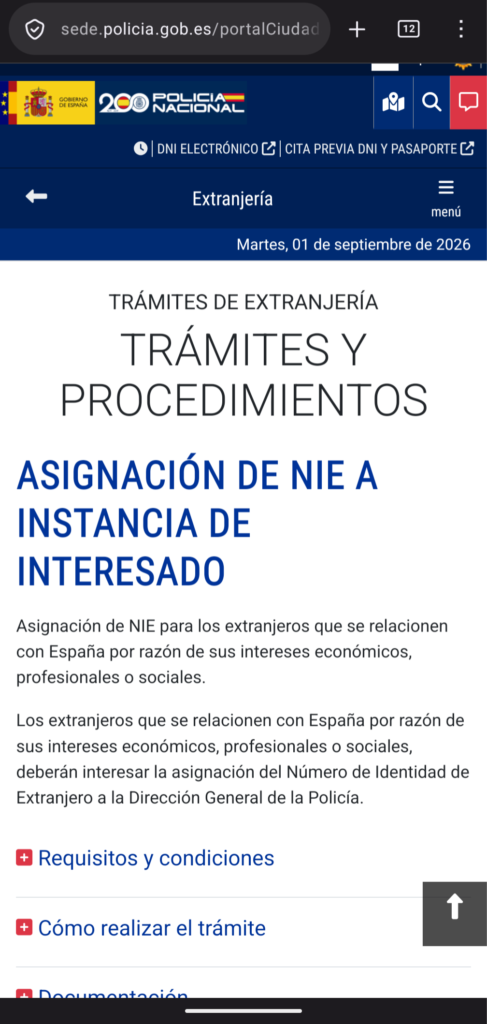
There are a few different ways to get a NIE in Spain.
Sometimes it’s automatically included during the visa process. In this case, you’d apply from your home country through a Spanish consulate. If everything is in order, the NIE is often issued the same day as a printed document. But sometimes you need to go to an appointment once you’re here to get your NIE.
For that, you book a cita prèvia (appointment) at an immigration office or police station, fill out the EX-15 application form, pay the tasa (fee) using Modelo 790 Código 012, and bring your passport plus copies to your appointment.
But again, I have to stress that your NIE, número de identidad extranjera, is not the same as the physical card. Once you have your NIE, you then apply for your actual ID card (TIE).
So here’s what the process typically looks like, as of August 2026.
Option 1 – Applying From Inside Spain
Many people apply once they’re already here. You’ll book a cita previa for a “NIE” or “asignación de NIE” appointment at the Oficina de Extranjería or a designated Policía Nacional station, depending on your case.
You bring your completed EX-15 form, your passport and photocopies, proof that you’ve paid the fee, and a document explaining why you need the NIE (a work offer, a property purchase, a study enrollment, and so on). Then you show up to your appointment and, if all goes well, walk out with your number.
Appointments are booked through the government’s cita previa portal, which is the same system used across the country.
Important: This option isn’t always available. It depends on your specific situation and the type of visa you’re applying for. So again, I suggest checking with a recommended lawyer.
Option 2 – Applying From Your Home Country
You can also request a NIE before you arrive, through the Spanish consulate that covers where you live. This route can be slower, and appointment availability at consulates varies a lot.
This is the process that I went through! In my case, they took my passport for 6 weeks. So I had to plan far in advance and get my NIE beforeeeee I even bought my plane ticket.
I always recommend checking some of the official rules on the Spanish Ministry of Foreign Affairs site. That’s a good starting place. I also have a guide on Visa Options for Spain if you’d like to check that out.
What Documents You Need
For a standard NIE application, you’ll generally need:
- The completed EX-15 form
- Your original passport plus a photocopy of the photo page
- Proof you’ve paid the Modelo 790 Código 012 fee
- Evidence of your reason for requesting the NIE
This is all available on the government websites. Here’s a link to the immigration office description of what you need.
Also, if someone is applying on your behalf, they’ll need a notarized power of attorney. Rules can vary slightly depending on your context, so always double-check and be over-prepared!
How Much a NIE Costs in 2026
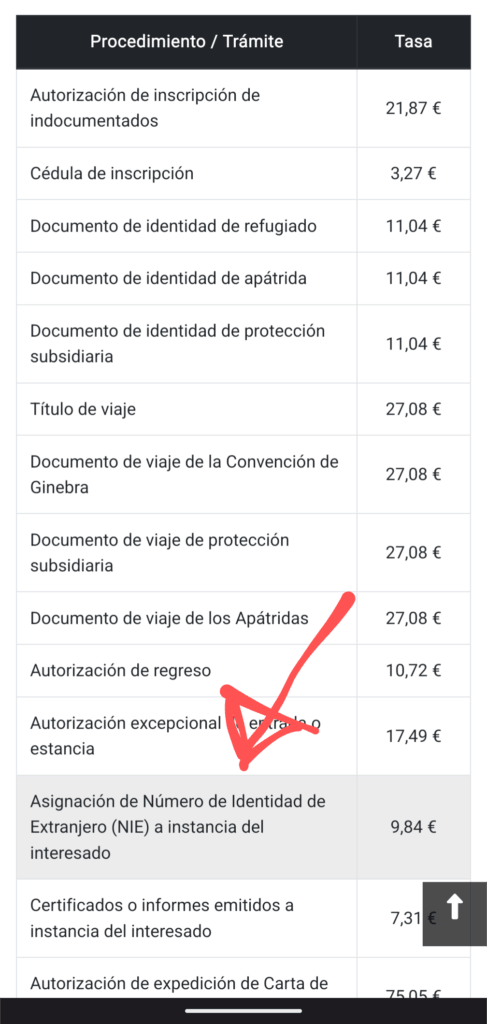
As of September of 2026, the fee for the NIE itself is only €9.84.
Later on, you’ll have to pay for the actual TIE,as well. And depending on your visa, you’ll have additional fees.
How Long It Takes
Once you’re actually at your appointment, a simple NIE is often issued the same day as a printed A4 sheet, sometimes called the “white sheet.” Especially if your appointment is in-person in Spain.
The hard part isn’t processing time, it’s getting the appointment in the first place. In busy cities like Valencia, appointment availability can be the thing that adds weeks to your timeline.
If you’re doing it at an embassy while you apply for your visa, then it can take longer. It took 6 weeks for me personally.
But the thing that most people don’t mention is how INCREDIBLY difficult it can be to get an appointment at an immigration office in Spain. Which is so annoying that I’m going to dedicate an entire section to it:
How to Get Your NIE in Valencia
In Valencia, NIE appointments are booked through the cita previa system for the province of València, choosing the extranjería or Policía Nacional option that fits your case. It has to be in the area you live in, though.
Appointment slots are notoriously hard to catch, and new ones only pop up based on the pre-programmed system. So you have to consistently refresh the page to check.
This is where I can actually help you more than a generic Spain guide can, because I’ve done this here, repeatedly.
Which Office Handles the NIE in Valencia
In Valencia, foreigner procedures run through the Oficina de Extranjería, which is a police station. Which one you’re sent to depends on the type of appointment you book in the online system.
In my case, it’s always been the one in Patraix (C/ dels Gremis).
The Cita Previa Scramble
Getting the appointment has always been the most stressful part of living here legally, for me and for nearly everyone I know who’s gone through it.
And the reason is super fun (sarcasm). There’s an organized mafia that uses bots to grab all the available cita previa slots the moment they’re released, and then resells them to desperate people for a fee.
So let’s say that appointments come out at 2PM. By 2:01 PM, they’re all taken up.
But to be fair, I’ve never paid them. And I don’t want you to either. Call me cabut (hard-headed), but I just checked the system every hour, on the hour, because new or cancelled slots trickle out throughout the day, and eventually I catch one.
It’s frustrating and it shouldn’t be this way. And I always try to remember that I’m doing this from a place of real privilege. There are immigrants and refugees navigating this exact same broken system with far less time, money, and support than I have.
So being persistent is free, and it keeps your money out of the hands of the people gaming the system. If you’re really in a desperate position, I’d recommend hiring a lawyer who may have the connections to get you an appointment.
Do You Need Your Empadronament First?
This depends heavily on where you live. But generally, NO. In Valencia, first you apply for your NIE. Then you try to get your padró / empadronament. Then with those two done, you apply for your TIE.
The reason is that you need your ID number to apply as a registered resident. Then once you’re registered as a resident, you apply for your ID card (your TIE), which has your address printed on it.
But that’s just from my experience in València.
If you’re confused about the empadronament, I also created a full guide on how to get your padró in Valencia.
Should You Hire a Gestoría or Do It Yourself?
Personally, I never hired a gestoría (lawyers). You can absolutely get a NIE yourself if your case is straightforward and you have the patience.
However, I will say that me being able to speak the languages AND having a Valencian partner was an eeeeeenormous help. Navigating any legal situation is super complicated, so this really made it easier for me to understand the system.
So while not necessary, you’ll need to do a lot of careful research.
A gestoría or immigration lawyer is worth it if your situation is complex, your Spanish is limited, or you simply don’t have the time and stress to spare.
So while I’ve always done my own, mostly out of stubbornness and not wanting to pay for something I can do myself. But I won’t pretend it’s the right call for everyone.
If you’d rather have someone handle the whole visa and paperwork side for you, Your Spanish Visa is a service I can point you to, and that link gets you a small discount 😉
Tips from someone that’s been there, done that
A few honest things I wish someone had told me before my first extranjería appointment.
The Appointment Is the Hard Part, Not the Paperwork
If you’re stressed about filling out the EX-15 correctly, relax. The form is simple. And all the documents you need are typically listed very clearly on the immigration website.
The real difficulty is landing the cita prèvia. For me, that’s always been the most stressful part.
Check for Appointments Every Hour, On the Hour
Slots get released and cancelled throughout the day, not just once. My whole strategy is persistence: I check the system every hour, on the hour, for days if I have to, and I always eventually get one.
It’s tedious, but it’s free, and it works. In my experience, I’ve always gotten appointments on Fridays or Mondays at 2PM or 3PM. Not sure if that’s the official time the IT system releases appointments, but it’s what has worked for me in the past.
Please Don’t Pay the Appointment Resellers
You’ll be tempted, because they make it look like the only way. But paying the bot operators just feeds the problem and makes it worse for everyone behind you, including people far more vulnerable than most of us reading this.
Persistence beats them without costing you a cent. I promise it can be done.
Bring More Copies Than You Think You Need
Spanish bureaucracy loves a photocopy. Bring extras of your passport and every document, because being sent away and having to get a NEW APPOINTMENT because you’re missing a single copy of something… is going to make you want to pull your hair out.
Double-Check the Form and Fee You Actually Need
A plain NIE uses the EX-15 form and the Modelo 790 Código 012 fee. Other procedures use different forms: an EU registration certificate uses the EX-18, and a TIE residency card is its own process.
Confirm which one your case needs before you pay anything, so you don’t turn up with the wrong paper.
Because trust me, if you pay the wrong fee… you probably ain’t getting that money back.
NIE in Spain: Frequently Asked Questions
The NIE number itself is permanent and doesn’t expire. Once it’s assigned, it’s yours for life. What can expire is the physical card or certificate tied to a residency permit (like a TIE), but the underlying number stays the same even when you renew the card.
Yes. This is what I did. You can apply through the Spanish consulate that covers your home region before you move. It can take longer than applying in Spain, and consulate appointment availability varies, but it lets you arrive with your number already in hand.
Not on its own. The NIE is only an identification number, not a work permit. Your right to work comes from your visa or residency status, and the NIE is simply the number attached to it. So having a NIE doesn’t automatically mean you’re allowed to work here.
You generally need a valid reason (economic, professional, or social) to request a NIE, so you can’t usually get one for no purpose at all. That said, plenty of legitimate reasons qualify beyond a job or a house, like studying, starting a business process, or certain family situations.
Your number never changes, so you don’t reapply for a new one. If you’ve lost the paper, you can request a certificate confirming your existing NIE number. Keep a photo of the document somewhere safe, especially before you get your actual TIE (the card).
It depends on your situation. EU citizens planning to stay longer than three months are expected to register within that window, while non-EU citizens usually get their NIE as part of the visa or residency process they arrived on. When in doubt, sort it early, because everything else depends on it.
tl;dr
The NIE is your foreigner identification number in Spain, and you’ll need it for nearly every legal, financial, or administrative task once you’re living here. Your TIE (the ID Card) will have this number printed on it.
So while getting one is cheap and usually same-day at the appointment: fill out the EX-15, pay the €9.84 Modelo 790 Código 012 fee, and bring your passport and copies.
The hard part is getting a cita previa, especially in a busy city like Valencia. You just gotta be persistent.
You can do it yourself if your case is simple, or hand it to a professional if it’s complex or you’re short on time and patience.
Bona sort!
If I can do it, you can too!
I’ve managed to go through a couple of different visa processes. From a student visa to a long-term residency, to now dealing with citizenship paperwork. It’s stressful, but manageable if you’re careful and over prepare.
So if you’re seriously thinking about relocating, grab my free Spain relocation checklist. It walks you through the whole sequence, NIE and empadronament included, so nothing catches you off guard.
It also helps to know what you’re signing up for before the paperwork starts. My guides to the cost of living in Valencia and the city’s different neighborhoods are a good place to picture the life waiting on the other side of all these forms.
And if you’d rather have the paperwork side handled for you, an immigration service like Your Spanish Visa can take it off your plate (that link gets you a small discount!).
Last verified: September 2026.
Fins ara, i bon viatge! — Kevin
Need help planning your trip to Valencia?
Here are the tools I use for the cheapest (and most reliable) vacation planning:
- 🏠Booking – Affordable hotels and apartments
- 🏠Hostel World – Safe and budget-friendly hostels
- ✈ Kiwi – My favorite tool for cheap flights
- 🚗Discover Cars – Best place for car rentals
- 📶Airalo – eSim cards for easy internet access while traveling
- 🦺Safety Wing – The #1 travel medical insurance
- 💸Airhelp – Cancelled flight compensation (it’s free!)
- 🗂️ Your Spanish Visa – Move to Spain the easy way
- 🍊 My Tourist Card Calculator – Find out if the VLC travel card is worth it for you
Affiliate disclosure: This post may contain affiliate links. These are links to services I personally recommend using for your trip to Valencia. At no extra cost to you, I may earn a small commission from these brands if you choose to make a purchase. Your support helps me pay my bills and eat more bunyols!